The Case for Depoliticizing Solar
- Samantha Sloan, Executive Vice President, Corporate Affairs, First Solar
The American solar growth story started with genuine bipartisan support when the Investment Tax Credit was created by a Republican-controlled Congress and White House in 2005.
That coalition eroded not because Republican opposition to solar was inevitable, but because the solar industry built crystalline silicon supply chains through Xinjiang, tolerated a trade association whose positions favored Chinese interests over enforcing American laws, and allowed itself to be conscripted into a partisan agenda.
Political influence campaigns don't fix that. Depoliticizing solar requires honesty about how it got politicized: confronting the supply chain question and China’s anti-competitive behavior, engaging Republican concerns on their own terms, and earning credibility rather than manufacturing it.
The window for this isn't permanently open.
Earlier this year, First Solar commissioned a national poll of Republican, Republican-leaning independent, and Trump voters, conducted by Fabrizio, Lee & Associates, the firm that polled for President Trump's campaign. The findings were unambiguous. GOP+ voters support utility-scale solar by a more than 20-point margin. When told the panels are American made with no ties to China, support jumps to 70%. Nearly 80% agreed the government should allow all forms of electricity generation, including solar, to compete on their own merits without political interference.
Republican voters are not hostile to solar. They are hostile to supply chains that run through Xinjiang, to federal incentives that subsidize Chinese jobs, and to an industry that spent years protecting those arrangements while invoking American values. That is a solvable problem, but only if the industry treats it as a structural one rather than a messaging one.
That distinction matters. The poll didn't uncover new support — it confirmed that support was always there. Republican voters back American-made solar free of Chinese supply chains by a 70-point margin. The technology was never the problem.
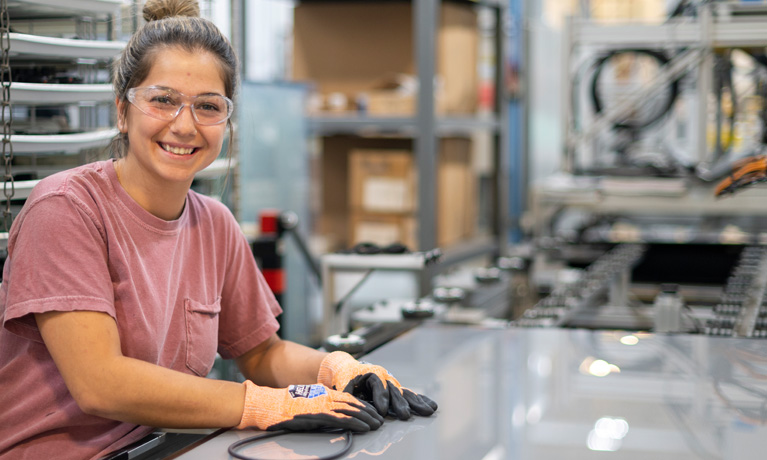
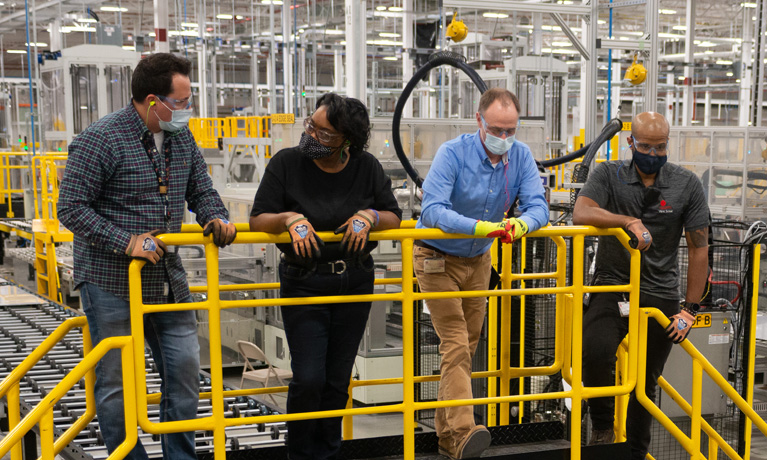
First Solar has staked billions on America. Our technology, invented in Toledo, Ohio, was developed and scaled here, and its IP remains in American hands. We operate five factories in Ohio, Alabama, and Louisiana, with a sixth under construction in South Carolina. We will have invested approximately $4.5 billion in American manufacturing and R&D infrastructure since 2019, directly employing more than 5,500 people in the US, by the end of 2026. Our supply chain does not touch Xinjiang or Chinese polysilicon. When trade enforcement actions came up — actions other parts of the industry fought — we supported them.
That is not a political strategy. It is a business model built on the conviction that American-made solar, produced by American workers, free of forced labor and strategic dependency, is worth building.
American technology, American factories, American workers, supply chains free of forced labor, and consistent enforcement of American trade laws aren't Democratic priorities or Republican ones. They are American ones.
That is the common ground on which a genuinely bipartisan American solar industry gets rebuilt. And it is the only path that holds.


