Advanced technology enabling greener futures
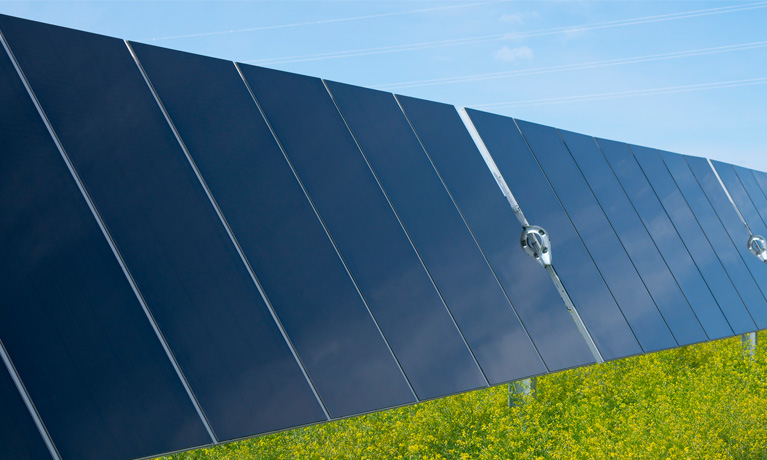
First Solar modules are subjected to extensive testing that replicates the environmental conditions modules could be exposed to over their 25+ year lifetime. Tests include long term "light soak" exposure to estimate the stability of energy output over the life of the module; the "hail ball" test to ensure modules can withstand golf-ball size hail pellets; and exposure to accelerated levels of heat and cold to ensure performance is not affected in extreme environmental conditions. Independent, third-party laboratories conduct testing and approve modules to recognized industry standards for safety and performance.

An ongoing global Production Reliability Monitoring program ensures that First Solar modules are continuously meeting or exceeding these safety and performance standards in all production locations. Once the modules reach the field, First Solar continues to test and monitor performance at select locations to ensure that they're operating as expected in all climates and weather conditions.

Key Product Design Features
Front (Superstrate) and Back (Cover) Glass
Laminated glass sheets are heat-strengthened to withstand handling and thermally induced stresses, while avoiding breakage over the 25+ year module life.
Semiconductor
Stable CdTe compound semiconductor material, applied in a very thin layer, forms the active photovoltaic cells, which convert sunlight into electricity.
Laminate Material
Used to bond the back (cover) glass to the front (superstrate) glass, sealing the photovoltaic device from the environment.
Environmental Attributes of CdTe Technology
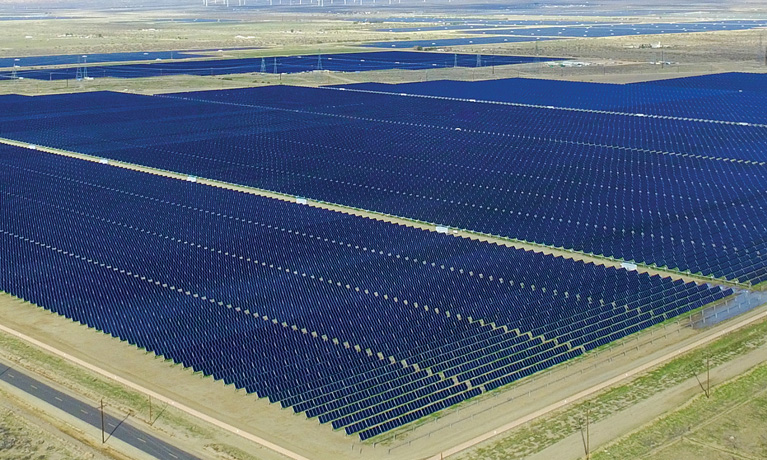
The semiconductor material used by First Solar is uniquely capable of producing high volume, low cost solar modules. With the smallest carbon footprint and fastest energy payback time of any PV technology on the market, First Solar combines the economic benefit of low-cost with superior environmental performance to provide truly sustainable energy solutions. When in operation, First Solar modules generate electricity with no air emissions, no waste production, and no water use.
Research from the U.S. Department of Energy's Brookhaven National Laboratory concluded:
Large-scale use of CdTe PV modules does not present any risks to health and the environment, and recycling the modules at the end of their useful life completely resolves any environmental concerns. During their operation, these modules do not produce any pollutants, and furthermore, by displacing fossil fuels, they offer great environmental benefits. CdTe PV modules appear to be more environmentally friendly than all other current uses of Cd.*
* Source: "RENEWABLE & SUSTAINABLE ENERGY REVIEWS", Vol 8, 2004, pp 303–334, V M Fthenakis, "Life Cycle Impact Analysis of Cadmium in CdTe PV Production", with permission from Elsevier.