CdTe (CADMIUM TELLURIDE)
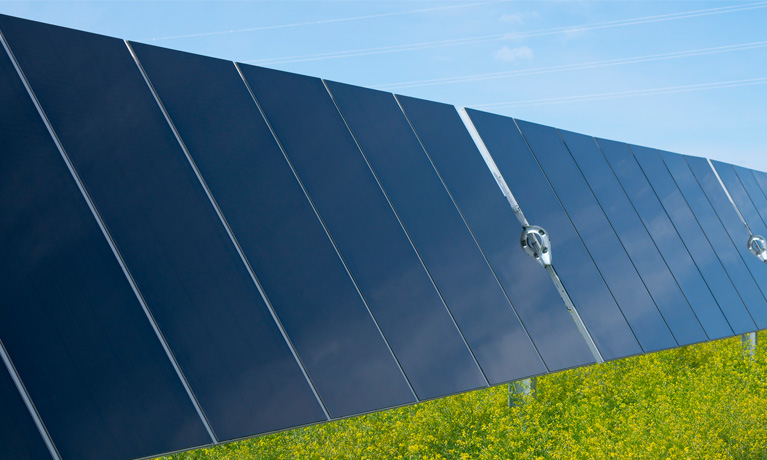
First Solar modules use the stable compound cadmium telluride (CdTe) as the semiconductor. This safe and advanced semiconductor technology contributes to First Solar's ability to provide clean, affordable, and sustainable energy solutions.
Clean
All photovoltaic (PV) technologies have significant environmental benefits compared to traditional fossil-fuel electricity generating technologies. First Solar's cadmium telluride (CdTe) offers the following benefits.
- First Solar offers the solar industry's first comprehensive prefunded module collection and recycling program, ensuring that the solutions to climate change and energy independence today don't become a waste management challenge for future generations.
- CdTe PV technology has the smallest carbon footprint and fastest energy payback time of current PV technologies when measured on a life cycle basis.
- When in operation, First Solar modules generate electricity with no air emissions, no waste production, and no water use.
- On a life cycle basis, at least 89% of the air emissions associated with electricity generation could be prevented if electricity from First Solar's CdTe modules displaced electricity from the grid.
- Using CdTe in PV modules converts cadmium, a waste byproduct of zinc refining, into the stable compound of CdTe where it is safely sequestered for the 25+ year lifetime of the module.
Affordable
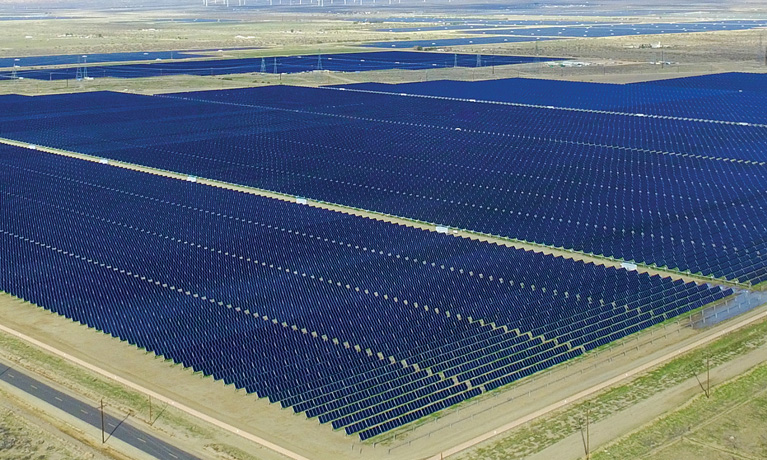
First Solar's CdTe technology is uniquely capable of producing high-volume, low-cost solar modules, driving solar to be an economically viable solution to climate change and energy independence.
- A low-temperature coefficient that results in better performance compared to traditional silicon modules at higher temperatures.
- Enhanced suitability for high-volume, low-cost module production.
Independent Studies
First Solar's CdTe PV technology enables clean, affordable, sustainable electricity generation. CdTe's physical properties, including its extremely low vapor pressure, high boiling and melting points, and its insolubility in water, limit its mobility in the environment.
- In 2009, an in-depth assessment of the environmental, health and safety aspects of First Solar's CdTe PV systems and manufacturing operations was carried out under the authority of the French Ministry of Ecology, Energy, Sustainable Development and the Sea. It concluded that, "During standard operation of CdTe PV systems, there are no cadmium emissions - to air, to water, or to soil. In the exceptional case of accidental fires or broken panels, scientific studies show that cadmium emissions remain negligible. Accordingly, large-scale deployment of CdTe PV can be considered safe to human health and the environment."
- A peer review of major studies on the environmental profile of CdTe PV organized by the European Commission, Joint Research Center and moderated by the German Environment Ministry concluded, "...CdTe used in PV is in an environmental stable form that does not leak into the environment during normal use or foreseeable accidents...."
- Independent analysis indicates that CdTe modules do not pose a risk during fires. CdTe has an extremely low vapor pressure, high boiling and melting points and is almost completely encapsulated by molten glass when exposed to fire. Exposure of pieces of CdTe PV modules to flame temperatures from 760 to 1100°C illustrated that CdTe diffuses into glass, rather than being released into the atmosphere. Higher temperatures produce further CdTe diffusion into the glass.
- Through outdoor leaching experiments with small fragments of CdTe modules, an independent study estimated that in a worst-case scenario materials leached from the modules into water or soil was no higher than the German drinking water concentration limit.
- AliFirst Solar’s CdTe PV modules have been tested in accordance with applicable waste characterization protocols and at end-of-life can be classified as ‘non hazardous waste for recovery’ in Europe and as a federal non-hazardous waste in the US.